

Electronic Press Kit
ABOUT
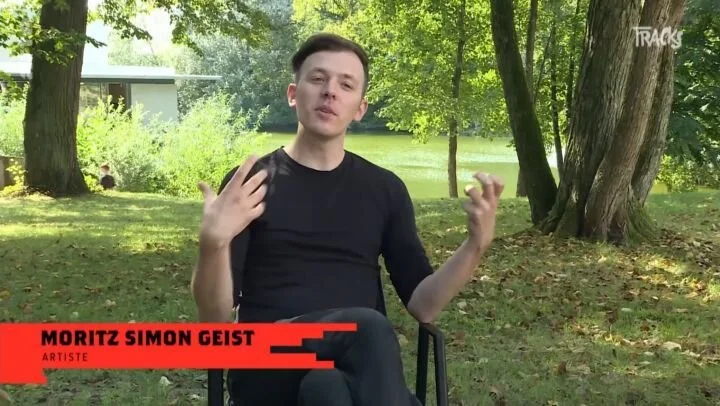
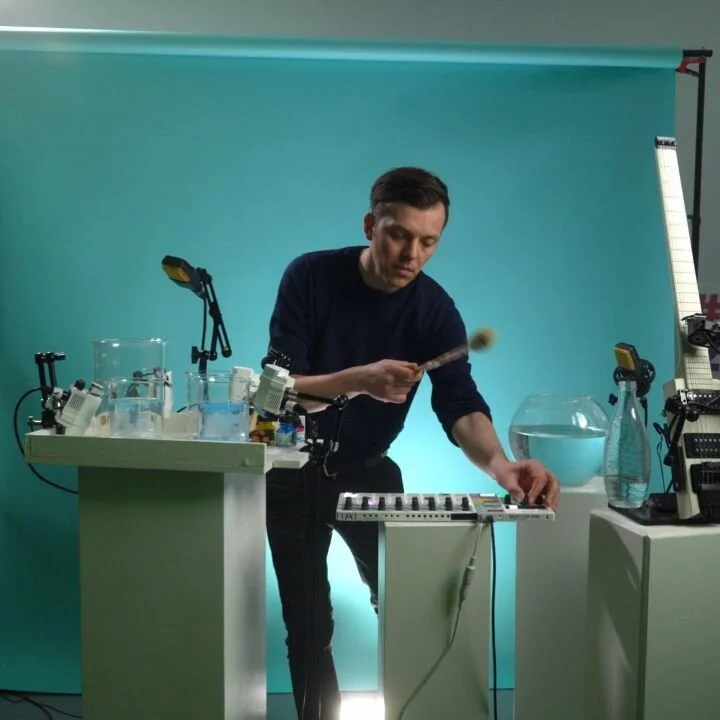
Moritz Simon Geist is a visual artist, researcher, and music producer whose work centers on the intersection of robotics, physical sound, and algorithmic agency. His practice explores the transition from functional mechanical instruments to autonomous entities, examining the materiality, psychological and aesthetic conditions of human-machine interaction.
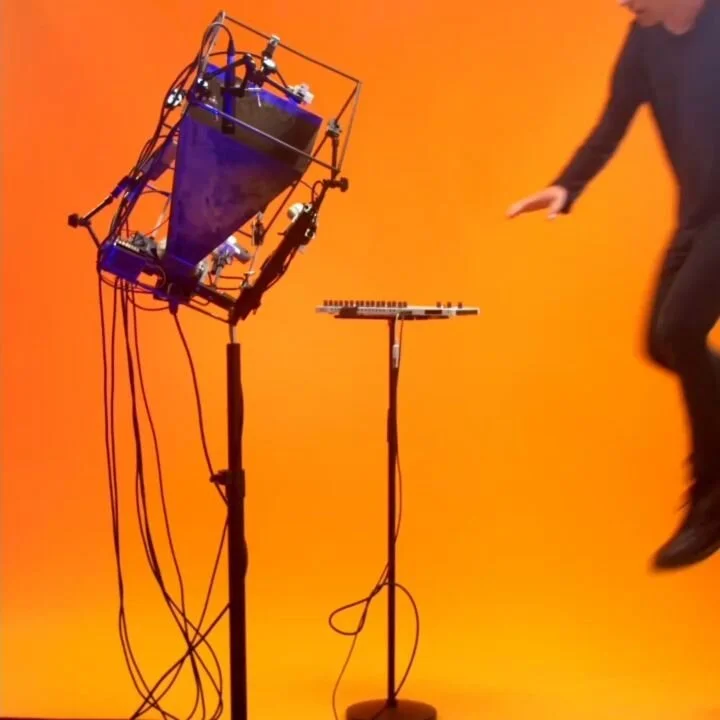
With a research foundation in semiconductor physics and robotics, Geist deconstructs complex technical systems to investigate material fragility and algorithmic behavior. His artistic evolution has moved from performative kinetic installations towards large-scale autonomous sculptures that utilize artificial intelligence and computer vision to engage with their surroundings.
Works
In 2012, Geist gained international recognition with the MR-808, a robotic instrument modeled after the classic TR-808 drum machine. This work established his presence at the intersection of media art and electronic music, winning several prizes and becoming part of the touring exhibition 'Electro' by the Philharmonie de Paris.
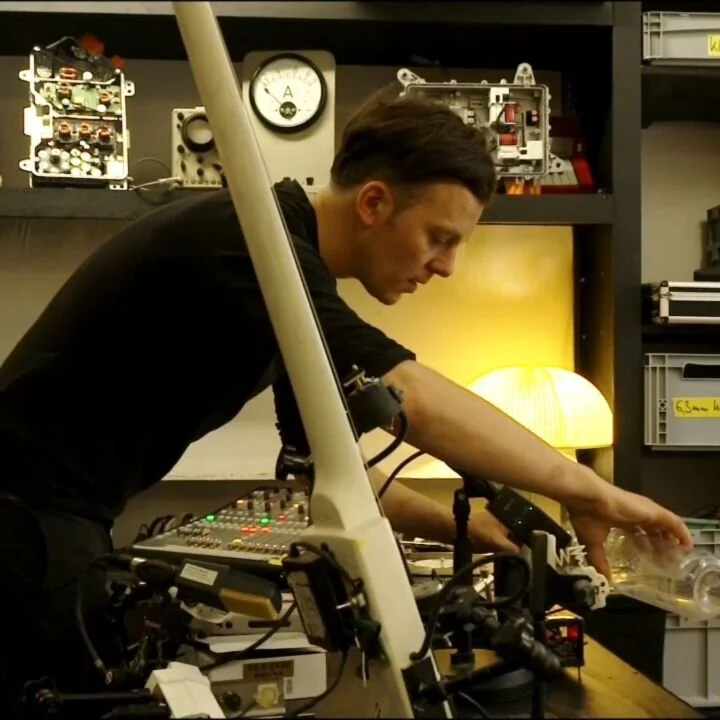
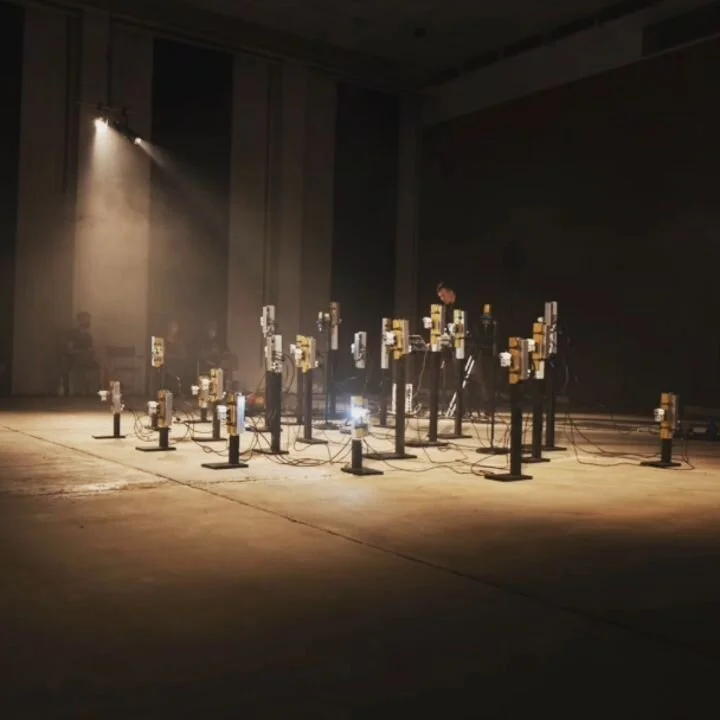
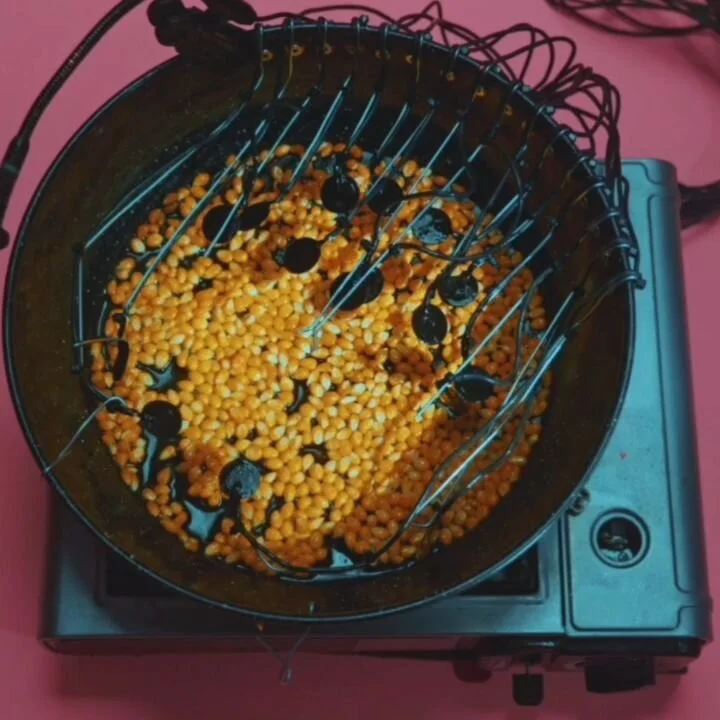
His subsequent work, Tripods One (2017), marked a shift toward futuristic, DIY mechanical systems that moved away from traditional musical references. This trajectory led to the 2018 album Robotic Electronic Music, (SRR / Kompakt), which was the first techno record performed entirely by physical robots.
Research and Agency
Geist’s current research, often framed under the concept of Automated Empathy, investigates the emotional resonance between humans and non-human actors. His 2023 work, “Don't Look At Me”, exemplifies this by using generative algorithms to modulate sound and movement based on audience presence and attention.
His work has been exhibited at major international institutions, including the Venice Biennale, Ars Electronica, ZKM Center for Art and Media, the MIT Museum, and the Philharmonie de Paris. In 2024, he served as an Artist-in-Residence at Sony CSL Paris, focusing on AI-based autonomous systems and agent-based composition.
Collaborations and Public Collections
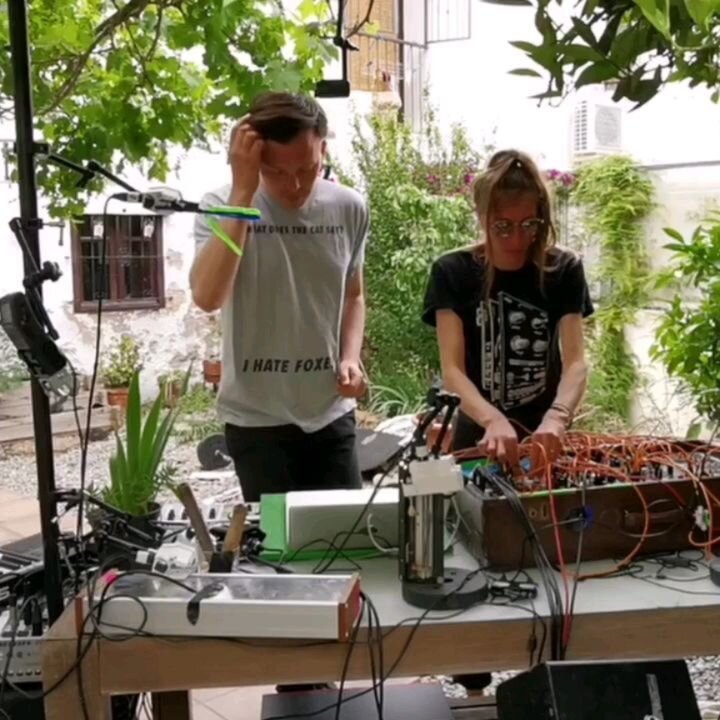
Geist has established long-term collaborations with influential figures in electronic music, most notably Mouse On Mars. He contributed a custom robotic system for their album Dimensional People and has shared stages with artists such as Tyondai Braxton, Robert Lippok, and Thieß Mynther.
His work is part of the permanent collection of Onassis Stegi in Athens. He has been recognized with the ISEA Conference Award 2024, the ZER01NE Seoul Working Grant 2023, and the VIA VUT Award 2019.
Selected Exhibitions
Biennale di Venezia, Italy (2019)
Ars Electronica Festival, Austria (2014, 2019, 2021, 2022)
ZKM | Center for Art and Media Karlsruhe, Germany (2018)
MIT Museum, Boston, USA (2024)
Onassis Stegi, Athens, Greece (2024)
SXSW Festival, Austin, USA (2019, 2023)
Philharmonie de Paris, France (2019)
MUTEK Festival, Spain (2018, 2024)
Ruhrtriennale, Germany (2016)
Collections and Residencies
Permanent Collection: Onassis Stegi, Athens
Artist-in-Residence: Sony CSL Paris (2024)
Fellow: European Media Art Platform (EMAP/EMARE) (2021)
Research Residency: Cité Internationale des Arts, Paris (2026-2027)
Academic and Research Contributions
Automated Empathy: Robotic Art and Agency, MIT Museum, Boston (2024)
Techno, Art, and Music Robots, ACM International Symposium ISWC, Espoo (2025)
What Happens When Creativity Becomes a Controlled Matter?, Borshch Magazine #3 (2018)
Electro: De Kraftwerk à Daft Punk, Philharmonie de Paris (2019)
STUDIO
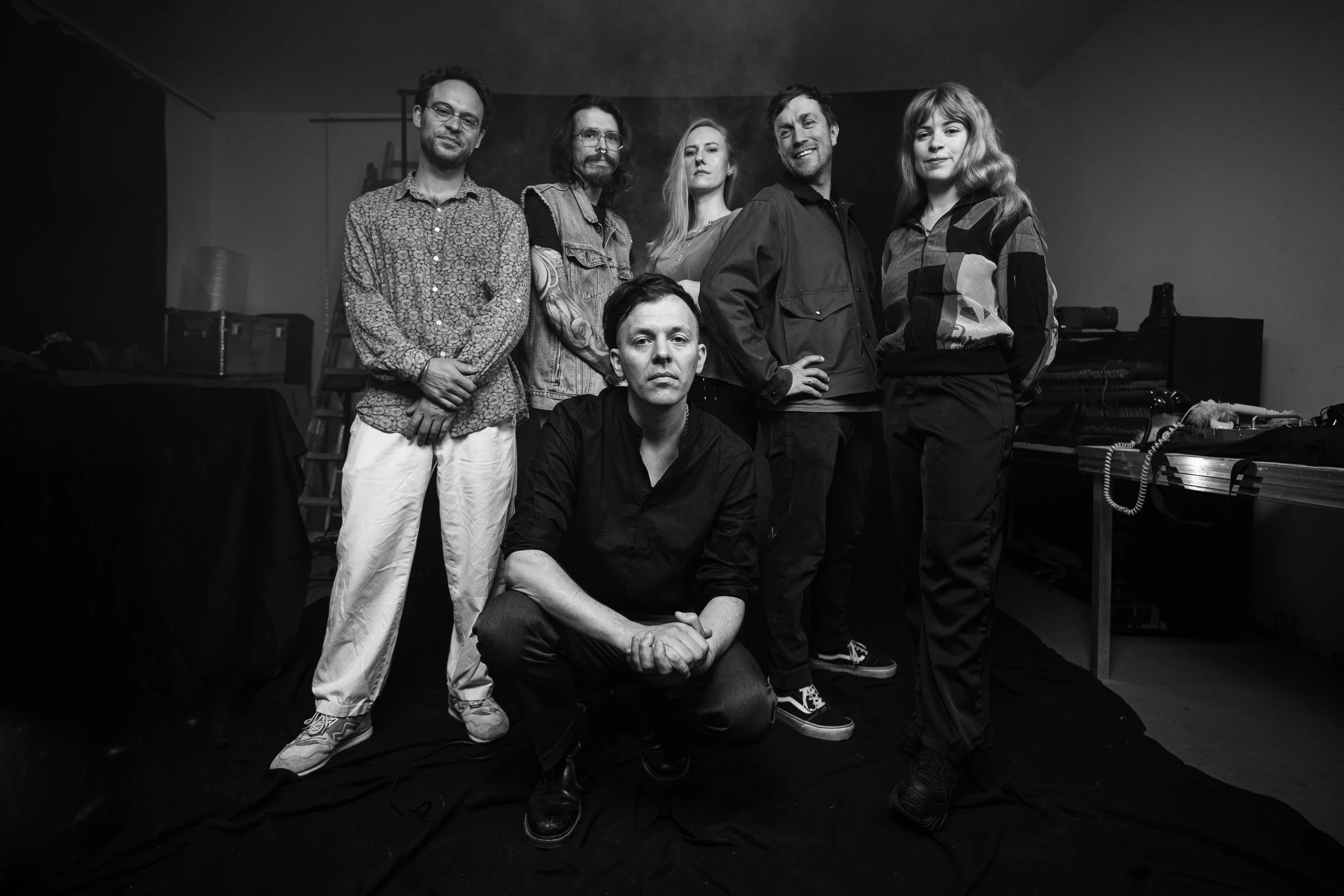
Anika Jankowski, Jonas Engelhardt, Moritz Simon Geist, Robert Arnold, Eva-Maria Clauss, Carl Ahner
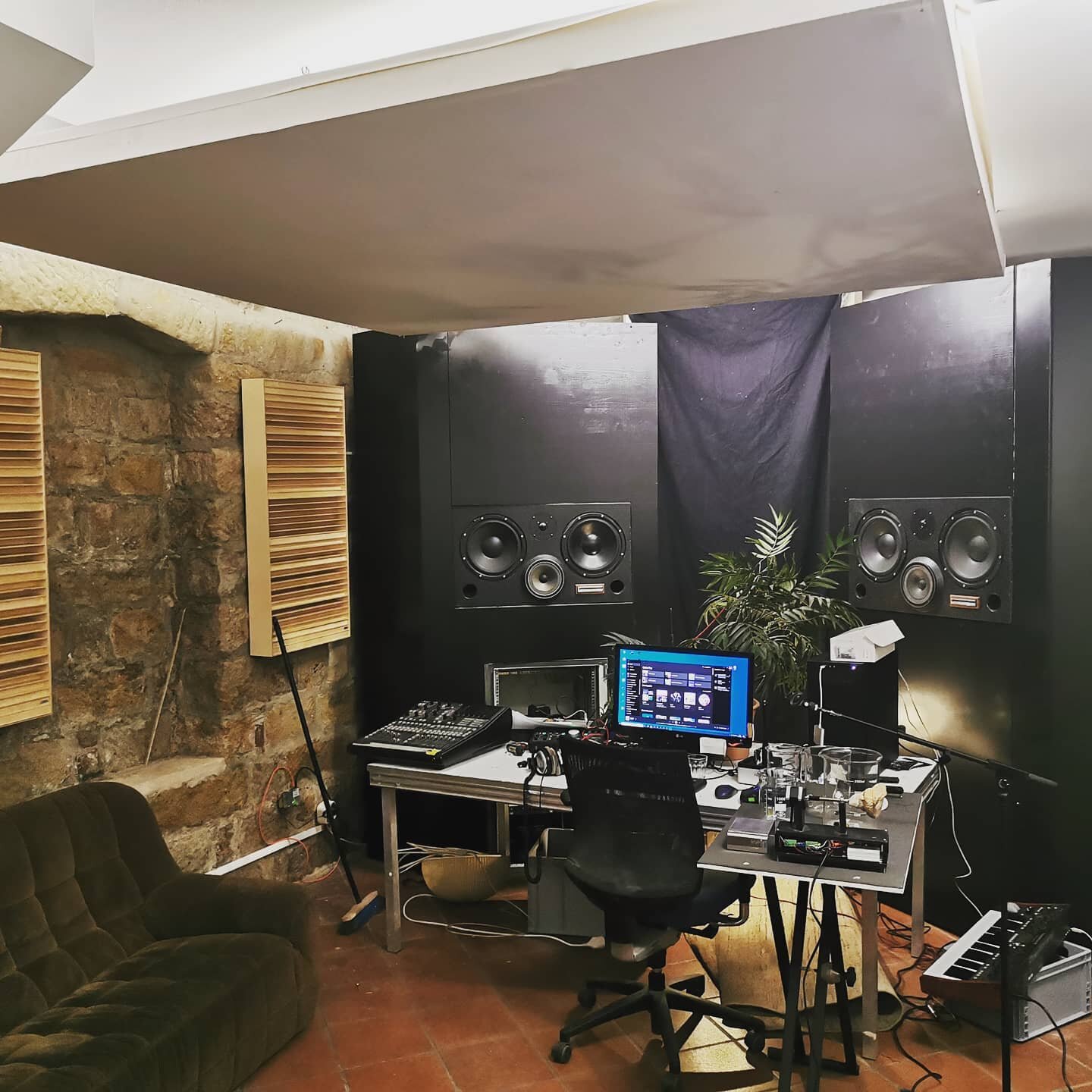
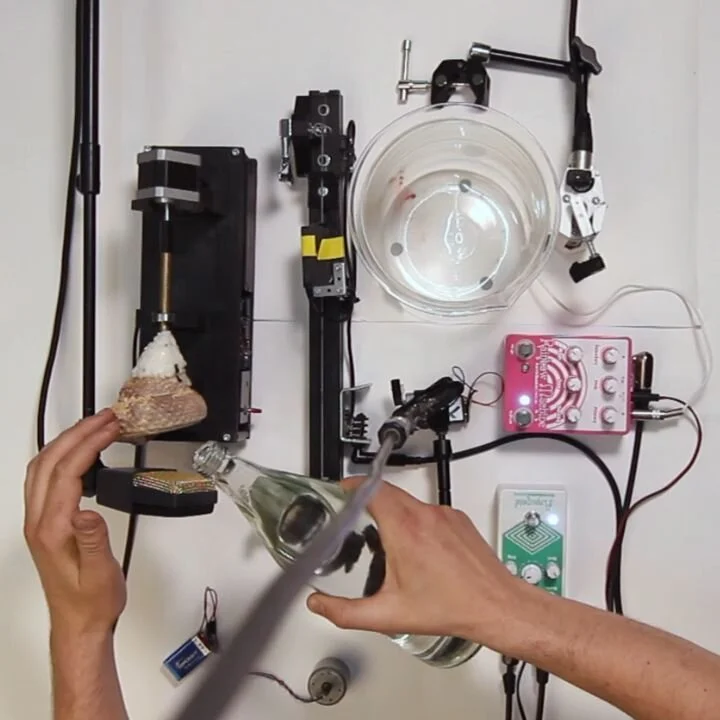
The Dresden-based studio functions as a dedicated research and production facility at the interface of robotics, sound, and fine arts. Outfitted with comprehensive infrastructure for computer-aided manufacturing and mechatronics, the space serves as an incubator for both proprietary autonomous systems and high-level technological collaborations. The studio provides specialized engineering and conceptual realization for notable artists and ensembles, including Rosa Barba, Robert Lippok, Jan St. Werner, and Mouse on Mars. By bridging technical precision with artistic inquiry, the facility maintains a continuous dialogue on the phenomenology of matter and the agency of non-human systems.