
The Anti-Social Algorithm
A Sonic Meditation on the Attention Economy
In an era where attention has become the primary currency of the digital landscape, the algo-kinetic installation Don't Look At Me proposes a radical inversion of the norm. While contemporary social media algorithms are engineered to harness and maximize human engagement (often amplifying emotional triggers to keep users locked to their screens) this robotic entity is designed with a specific, ingrained social anxiety. It is a machine that paradoxically strives for solitude.
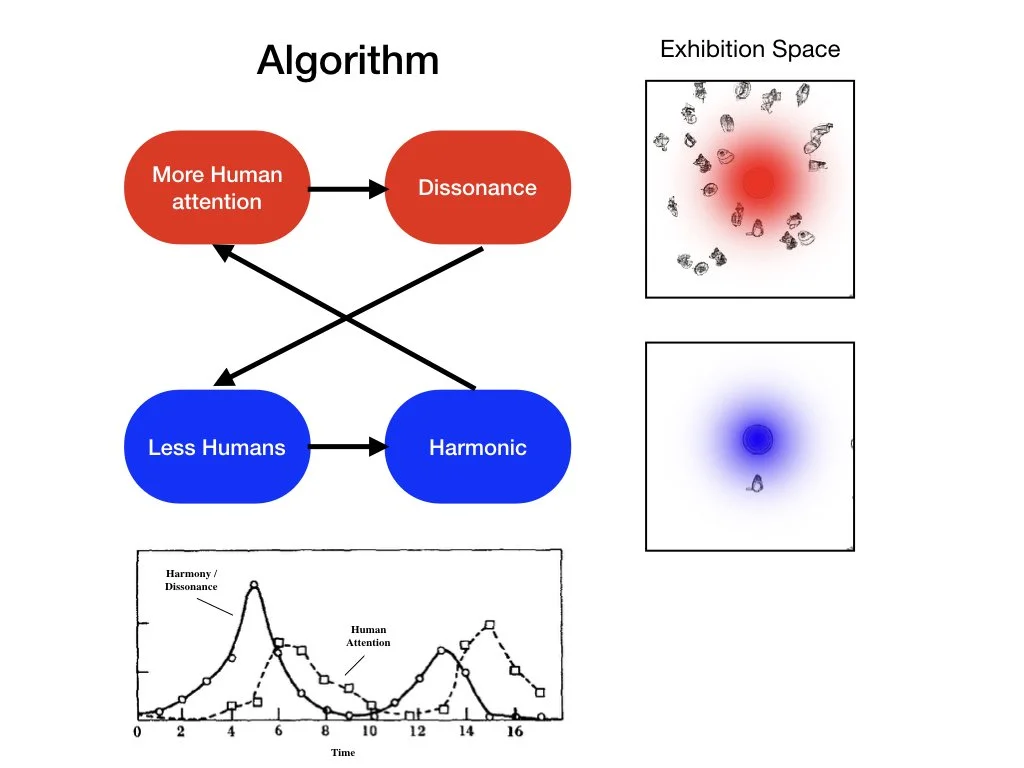
The installation functions as an autonomous "anti-social" agent. Utilizing a computer vision system to track the density, movement, and gaze of its audience in real-time, the machine creates an immediate feedback loop with its observers. The behavior of the piece is governed by a simple but rule: the more attention it receives, the more distressed it becomes. When the installation detects a human crowd, its movements turn frantic and its audio engine generates dissonance. It is only in moments of isolation, or in the presence of a single, calm observer, that the entity finds its equilibrium, emitting harmonic sine waves and moving with a slow, organic rhythm. This behavioral mechanic forces the audience to reconsider their own role in shared ecosystems, suggesting that to truly experience the beauty of the work, one must learn to step back and disengage.
Acoustic Robotics and Sine Wave Generation
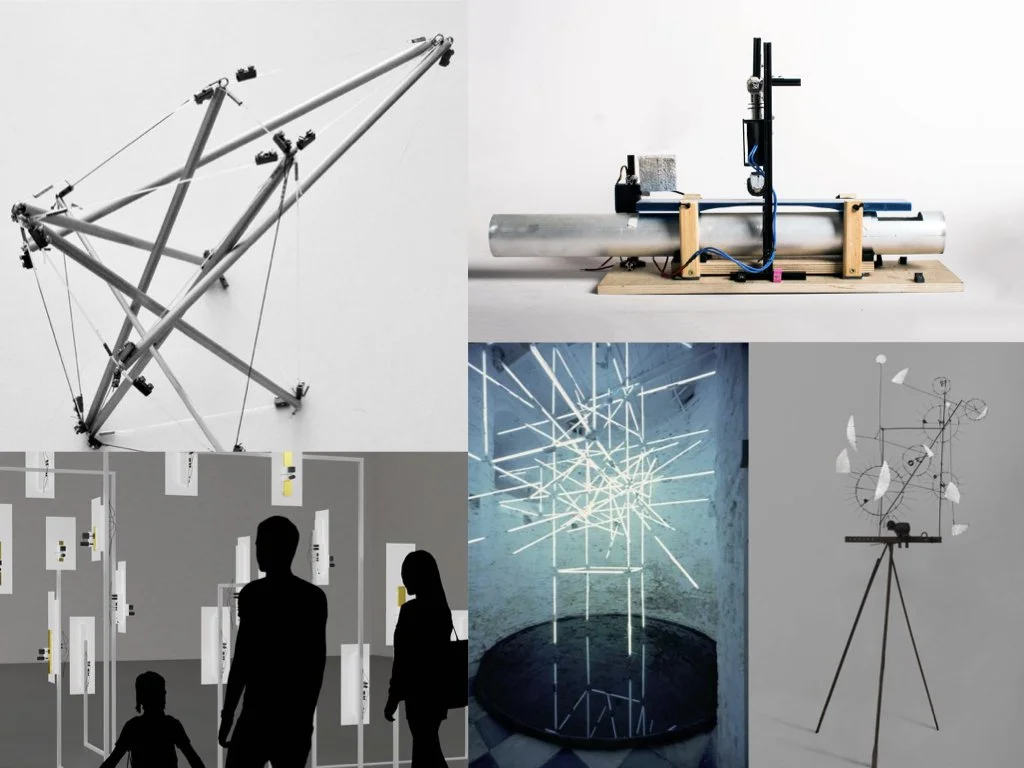
Musically, the work represents an evolution of Moritz Simon Geists Robotic Electronic Music (REM) . Unlike traditional electronic compositions that rely on digital synthesis projected through loudspeakers, Don't Look At Me is an acoustic instrument played entirely by robots. The core of the sound engine consists of newly developed robotic actuators, each comprised of tuned resonator tubes and vibrato elements.
Drawing inspiration from the avant-garde acoustic designs of American composer Harry Partch—celebrated for his microtonal scales and sculptural instruments—as well as the sonic structures of the Baschet Brothers, these actuators physically generate sine waves in real-time. The resulting soundscape evokes the physical presence of a vibraphone or glass harmonica, capable of shifting from warm, meditative drones to metallic interference patterns depending on the machine’s emotional state.
The Tensegrity Architecture
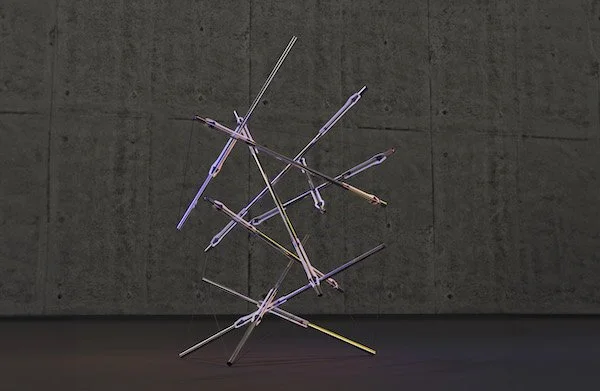
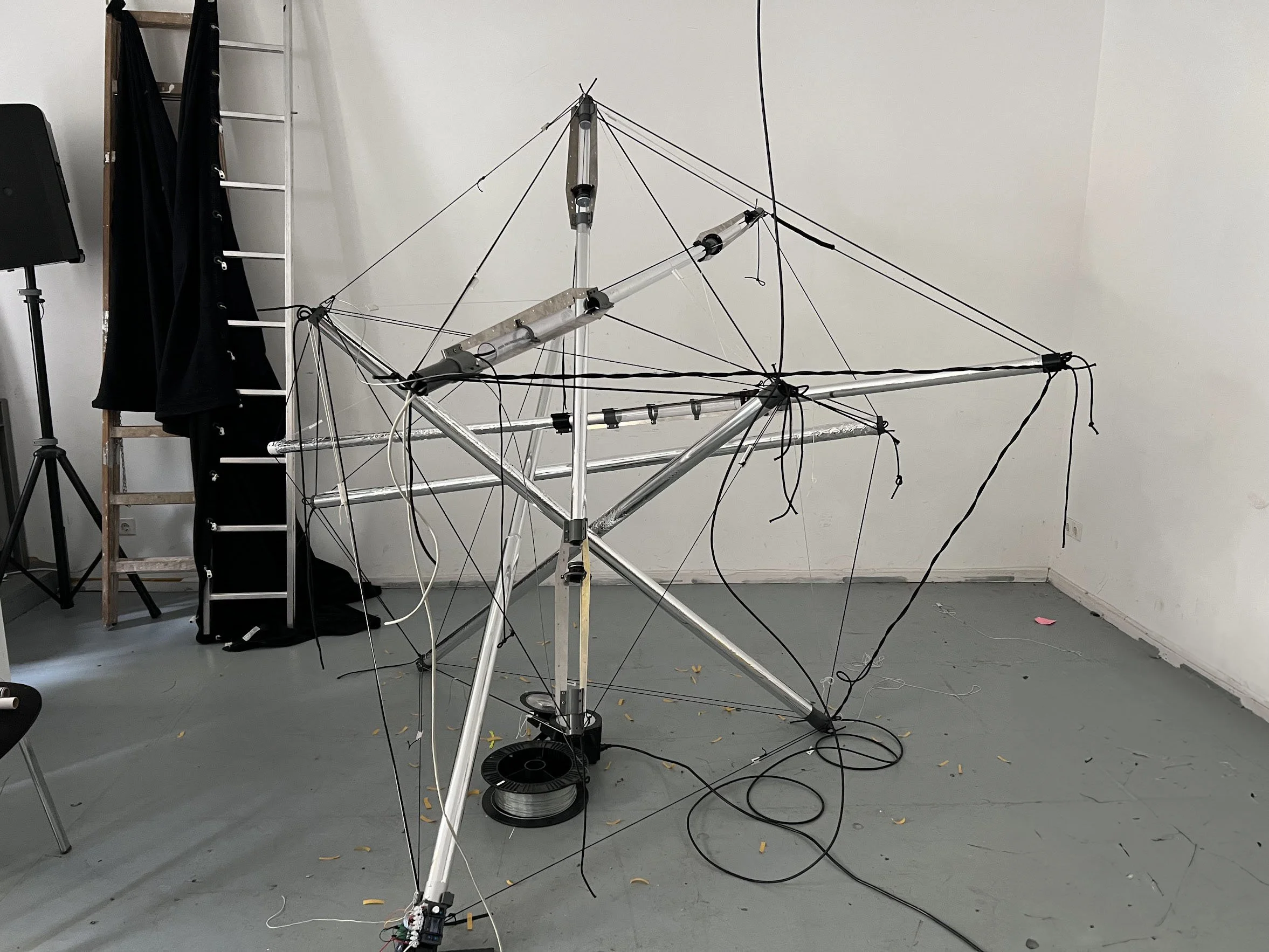
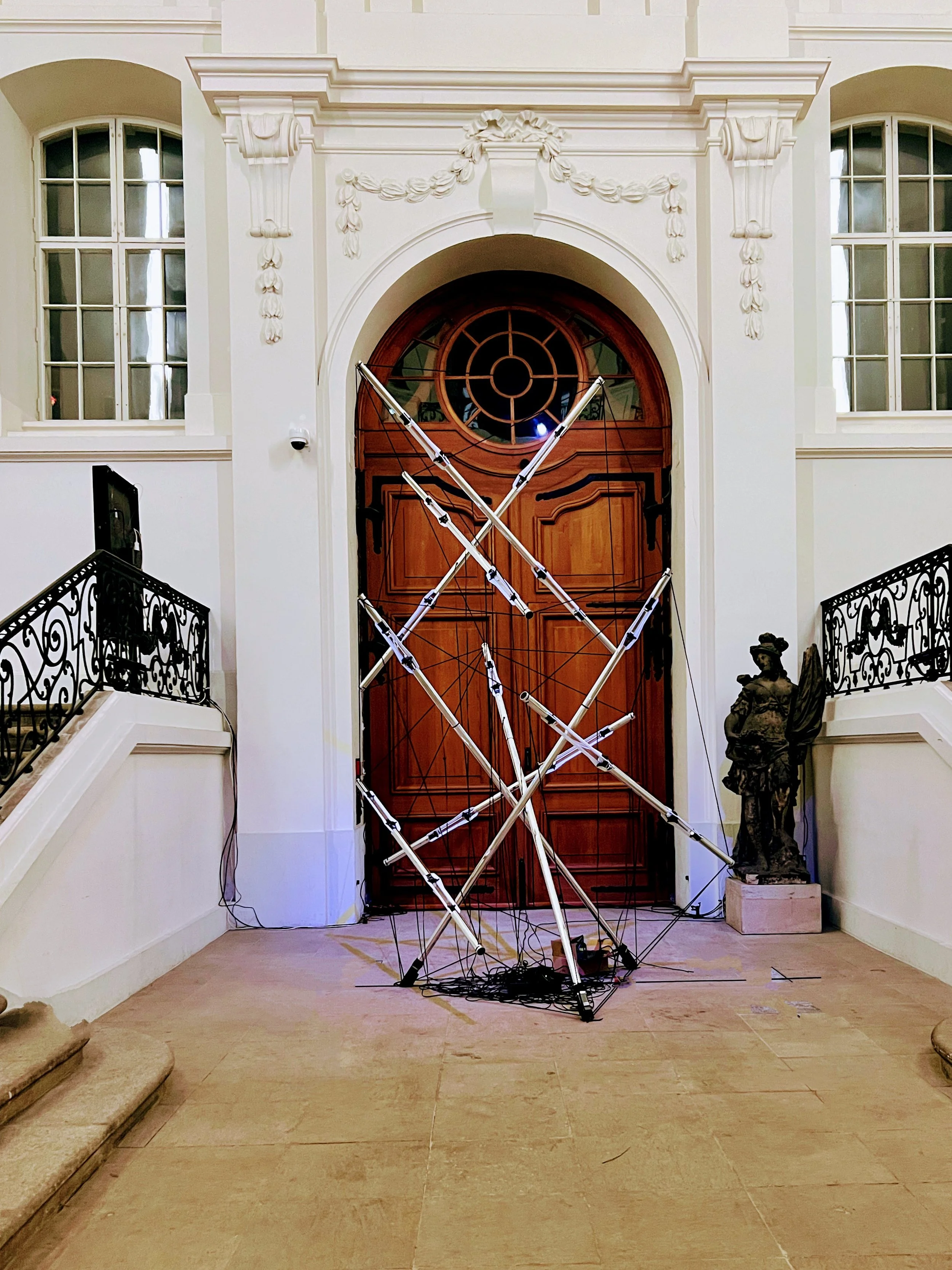
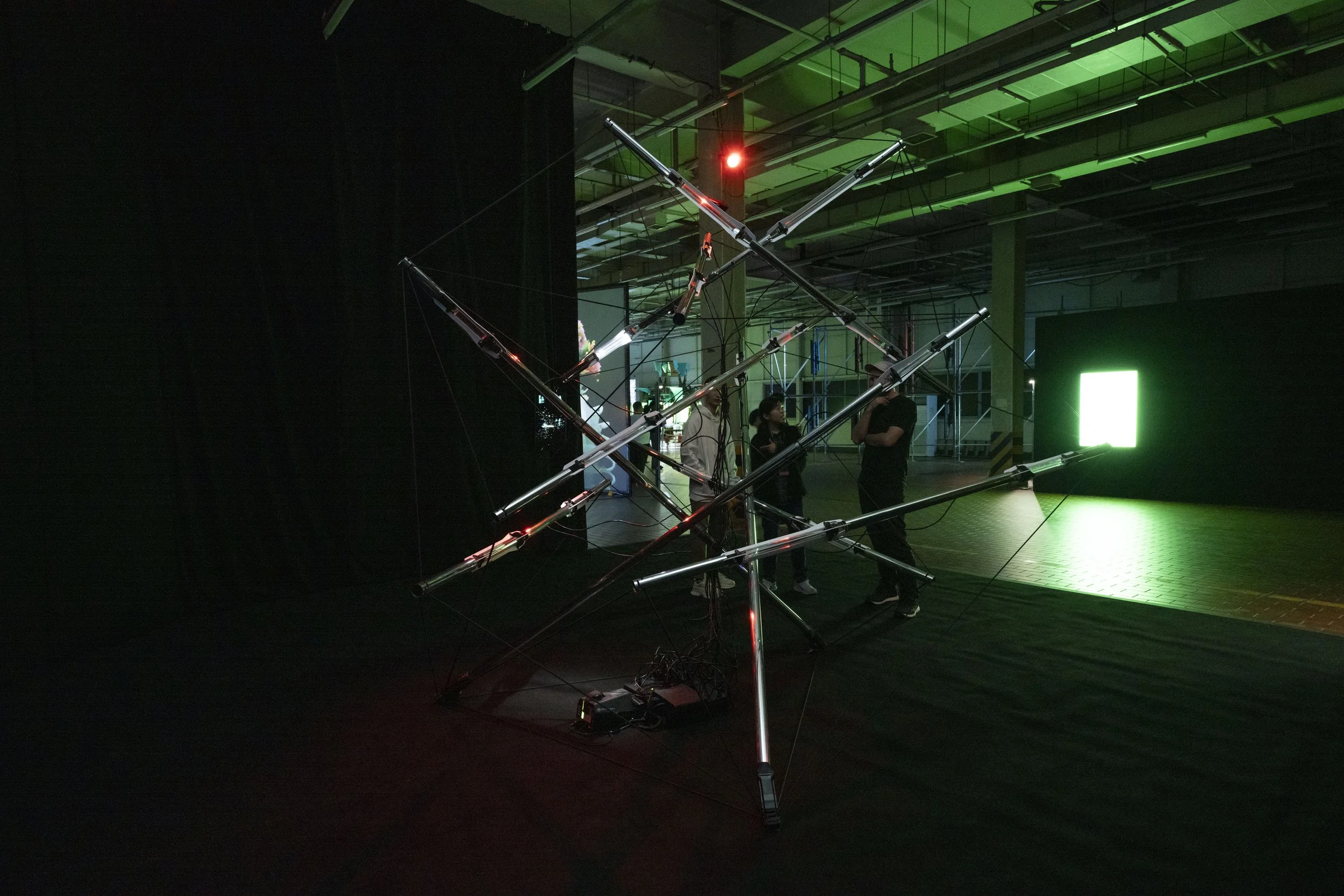
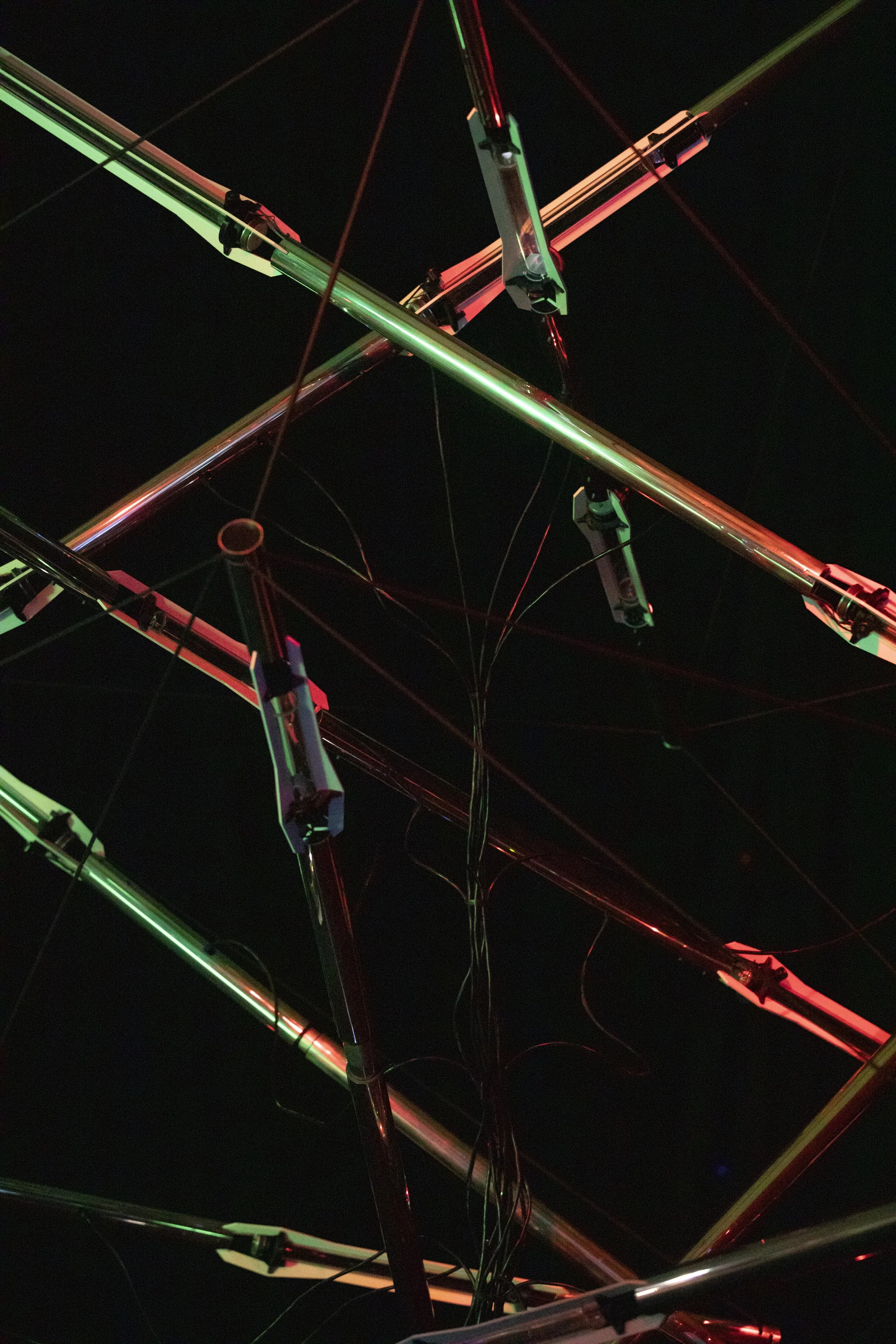
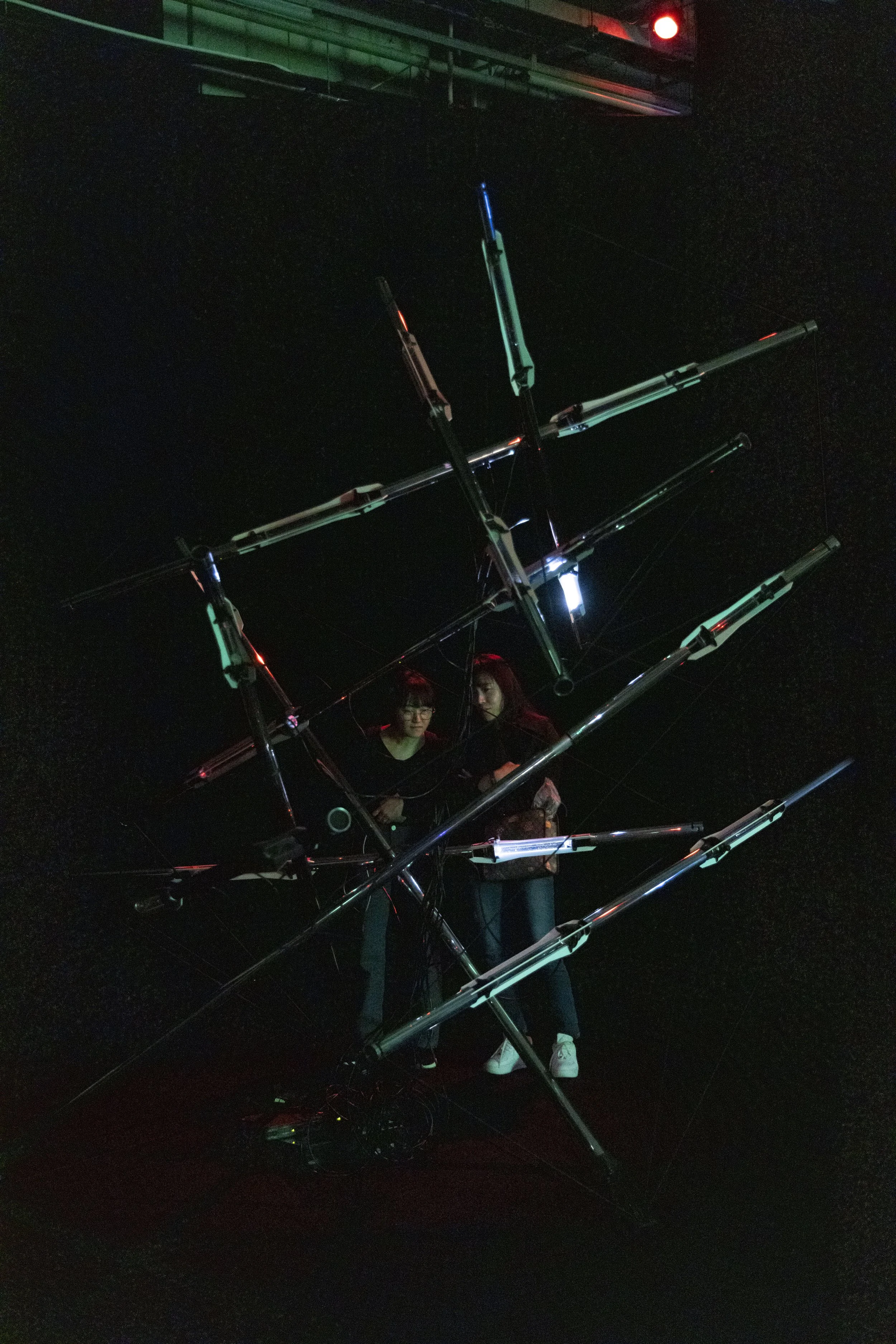
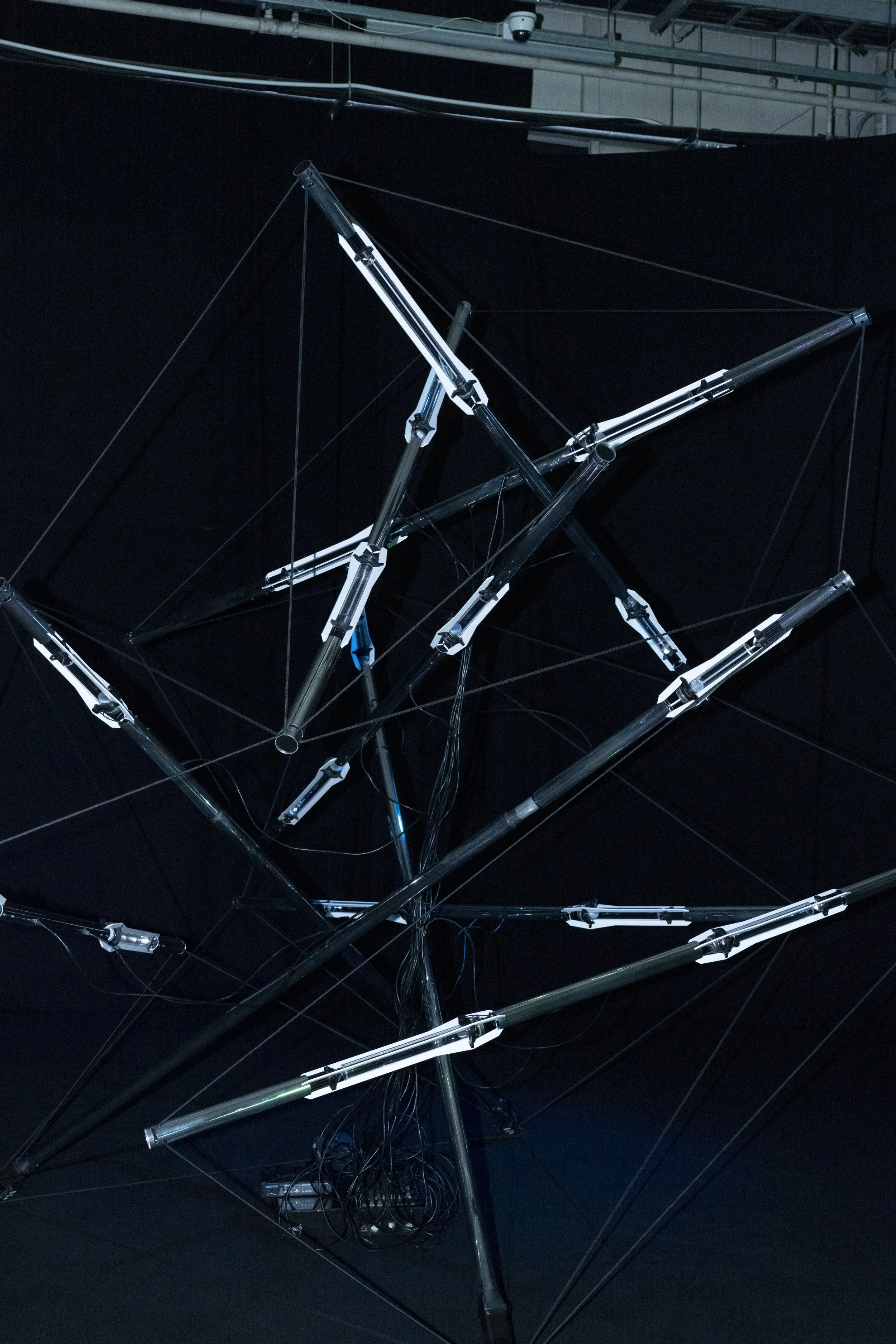
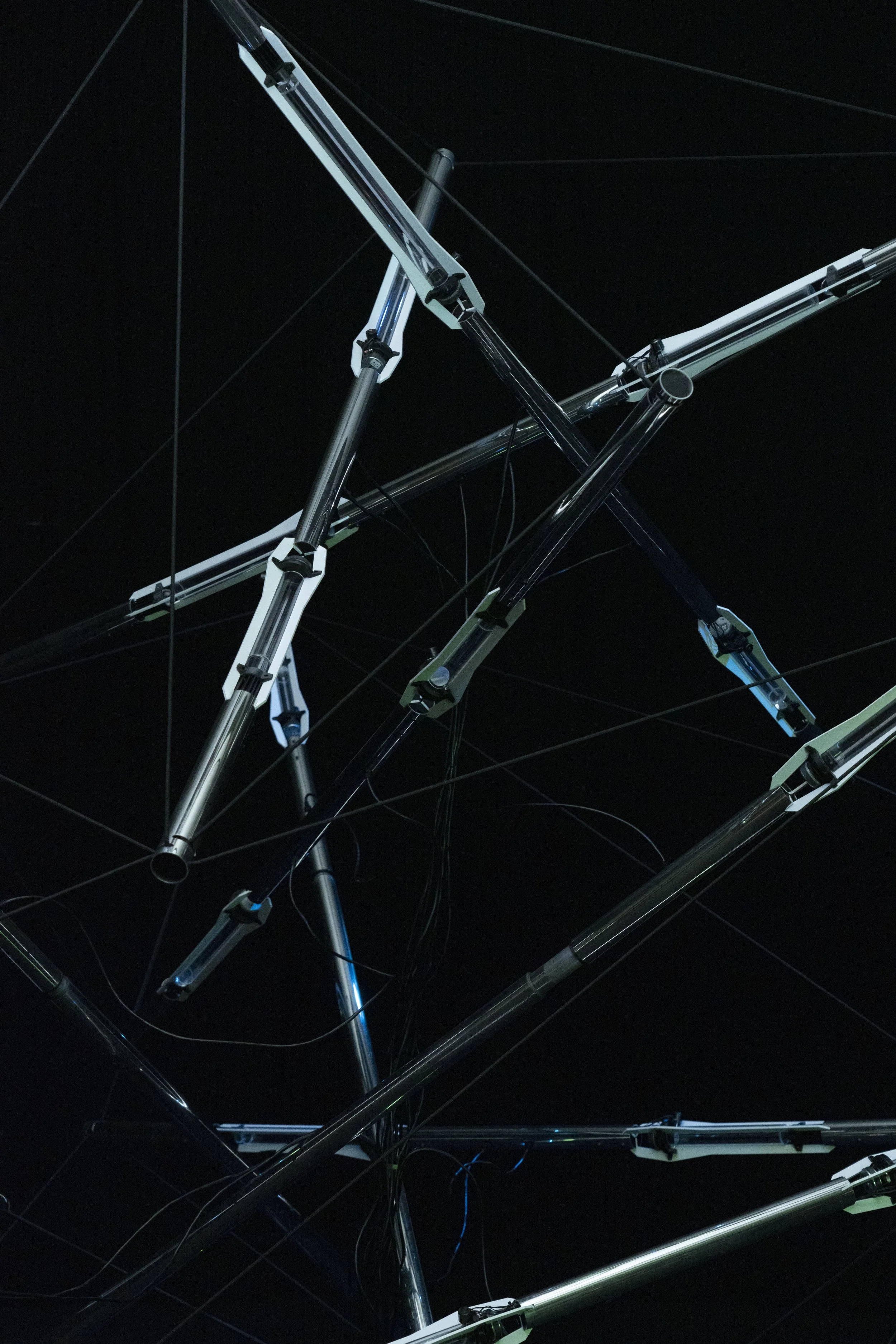
The physical body of Don't Look At Me is constructed as a 3x3 meter structure based on the Tensegrity principle (tensional-integrity), an architectural concept famously articulated by Buckminster Fuller and Kenneth Snelson in the 1970s. In a traditional structure, weight is supported by a continuous stack of rigid compression members. Tensegrity, however, relies on a delicate, floating balance: rigid struts are isolated from one another, held in place only by a continuous web of tensioned cables.
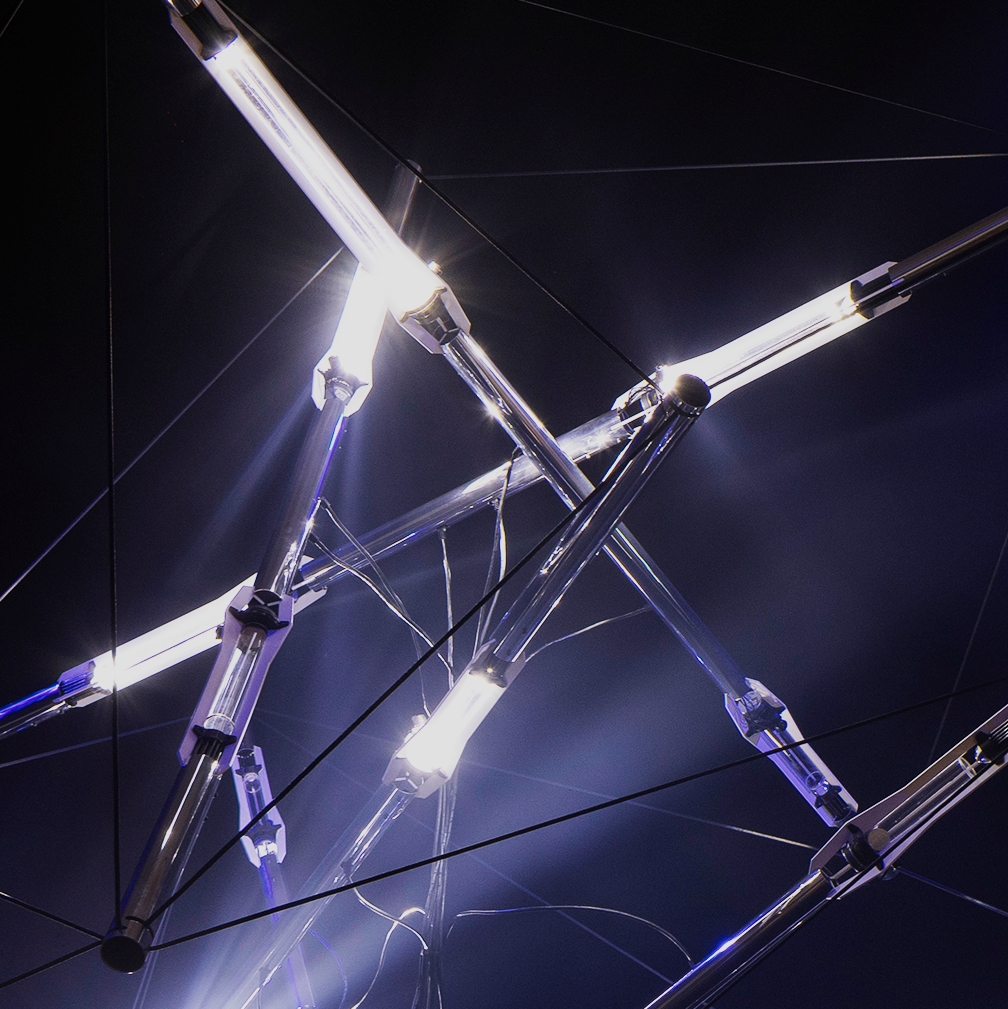
We translated this concept into a high-tech aesthetic using polished aluminum and acrylic glass. The design required a seamless integration of form and function; to maintain the illusion of a floating, ethereal object, all cabling and lighting systems are routed internally through the aluminum struts. The result is a structure that feels less like a built machine and more like a crystallized, suspended moment in space—rigid yet fragile, heavy yet weightless.
Kinetic Respiration: The "Breathing" Machine
While Tensegrity structures are typically static, we expanded the principle to create a fully kinetic organism. By integrating custom-developed linear actuators directly into the frame, we enabled the structure to dynamically distort its own geometry. These motors can alter the tension within the web, causing the entire 3-meter skeleton to expand and contract in real-time.
This capability allows the installation to mimic organic behaviors. Rather than moving with the jerky, servo-driven motions typical of robotics, the entity exhibits a smooth, rhythmic "breathing" cycle. This organic motion profile gives the robot an uncanny, human-like presence. It does not just occupy space; it inhales and exhales within it, blurring the line between a technological object and a living creature.
The Sensory System / Computer Vision
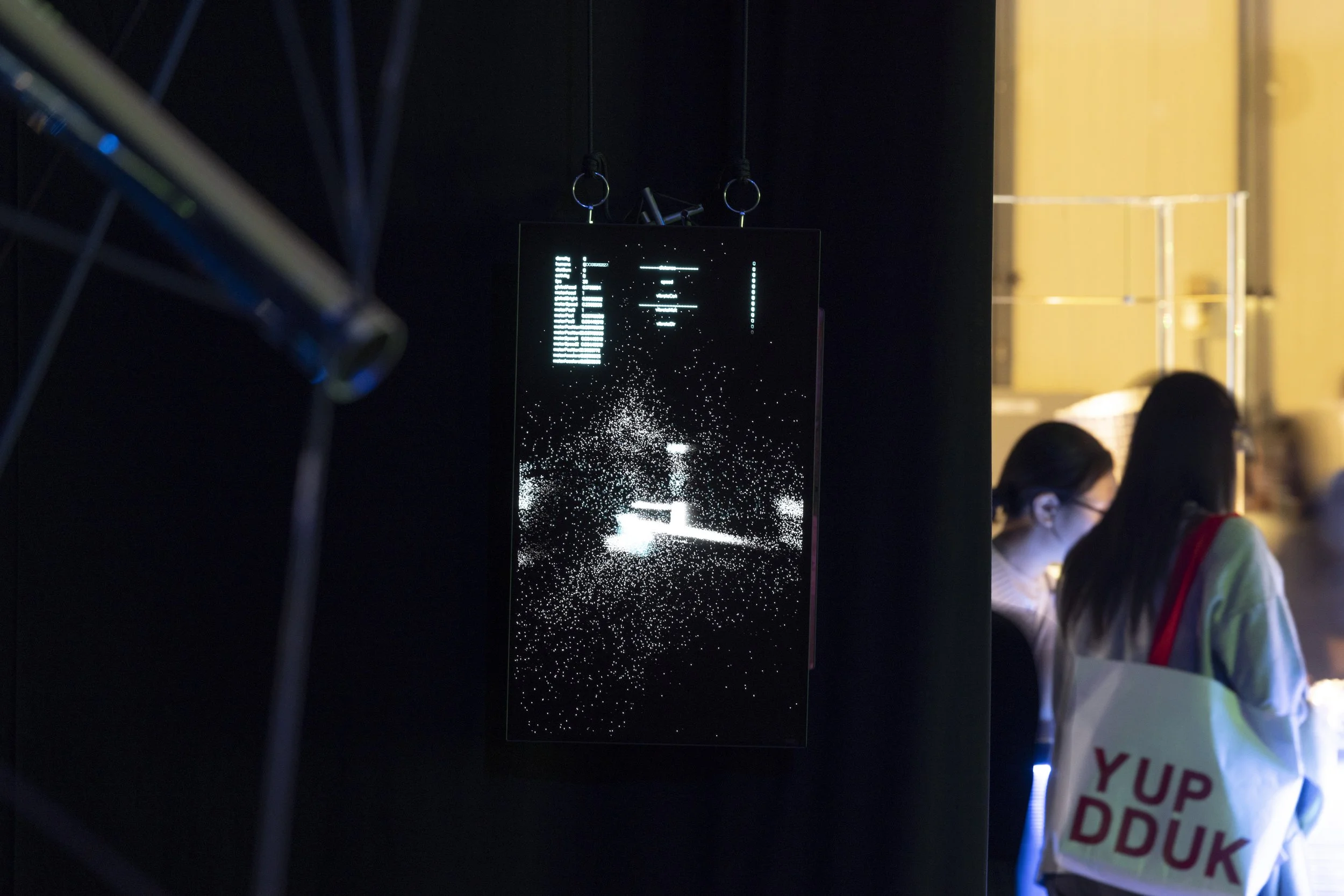
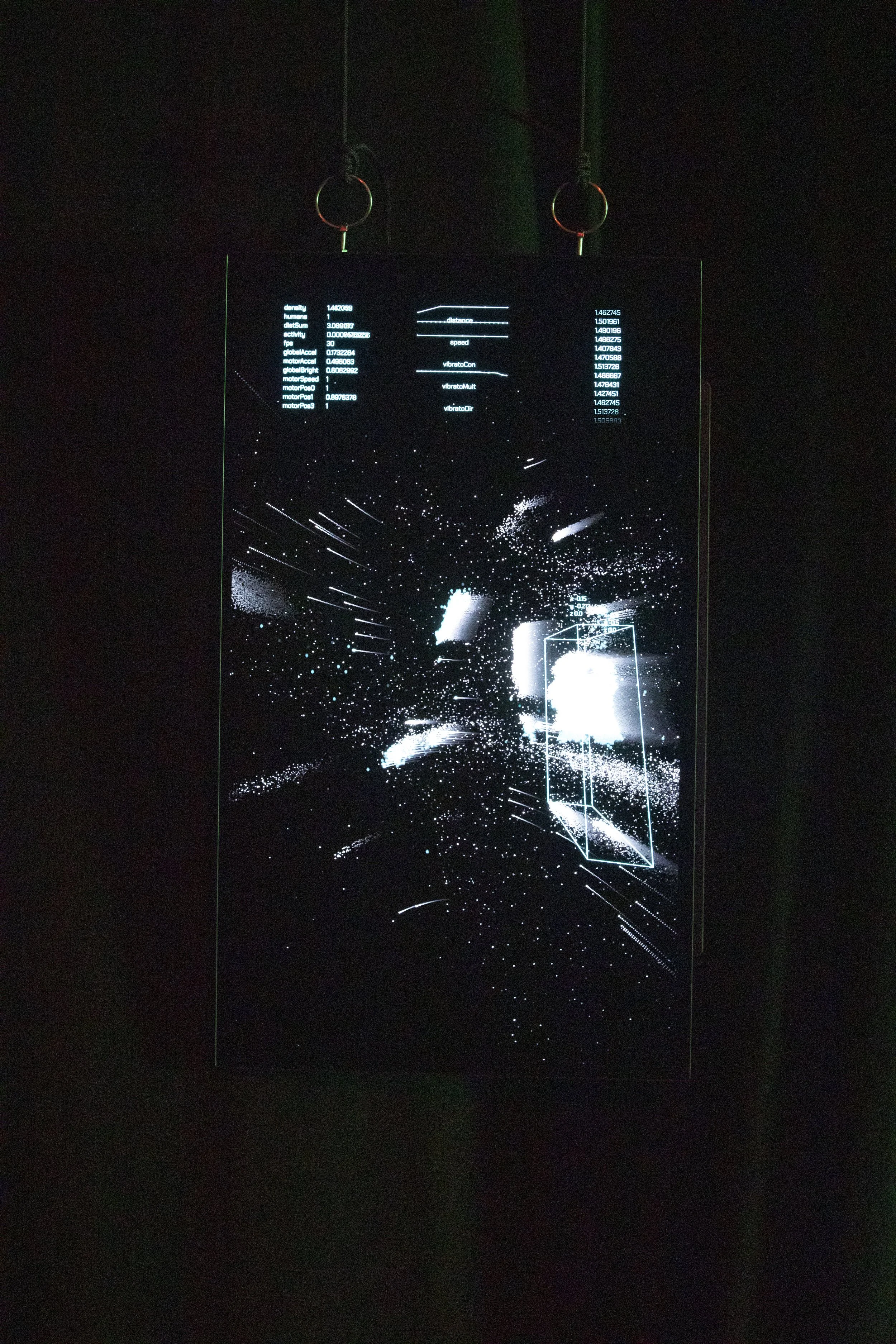
To enable the machine’s "social anxiety," the installation is equipped with a sophisticated sensory system powered by two Microsoft Kinect cameras mounted atop the structure. Unlike standard optical cameras, these depth-sensing devices allow the algorithm to perceive the exhibition space in three dimensions.
The system continuously scans the environment to generate a detailed map of the audience. It analyzes specific parameters: the number of people present (density), their physical proximity to the sculpture, and the direction of their gaze. This data is fed into a custom behavioral algorithm that interprets "attention" as a stressor. The cameras act as the entity's eyes, allowing it to "see" when it is being watched and triggering the defensive, dissonant reaction that lies at the core of the work's concept.

Credits
Concept & Direction: Moritz Simon Geist
Composition & Production: Moritz Simon Geist & Andi Toma (Mouse on Mars)
Programming: Albrecht Meixner, Florian Burdyl, Paul Werner Mechanical Design: Jonas Engelhardt, Mareike Pittig Electronics: Justus von Harten
Design & Scenography: Benno Bruksch, Carl Ahner Management: Anika Jankowski
Funding Developed and premiered in 2023 at ZER01NE Arts Incubator (Seoul, South Korea). Co-funded by ZER01NE.