
Acid Techno (making techno with chemistry equipment)
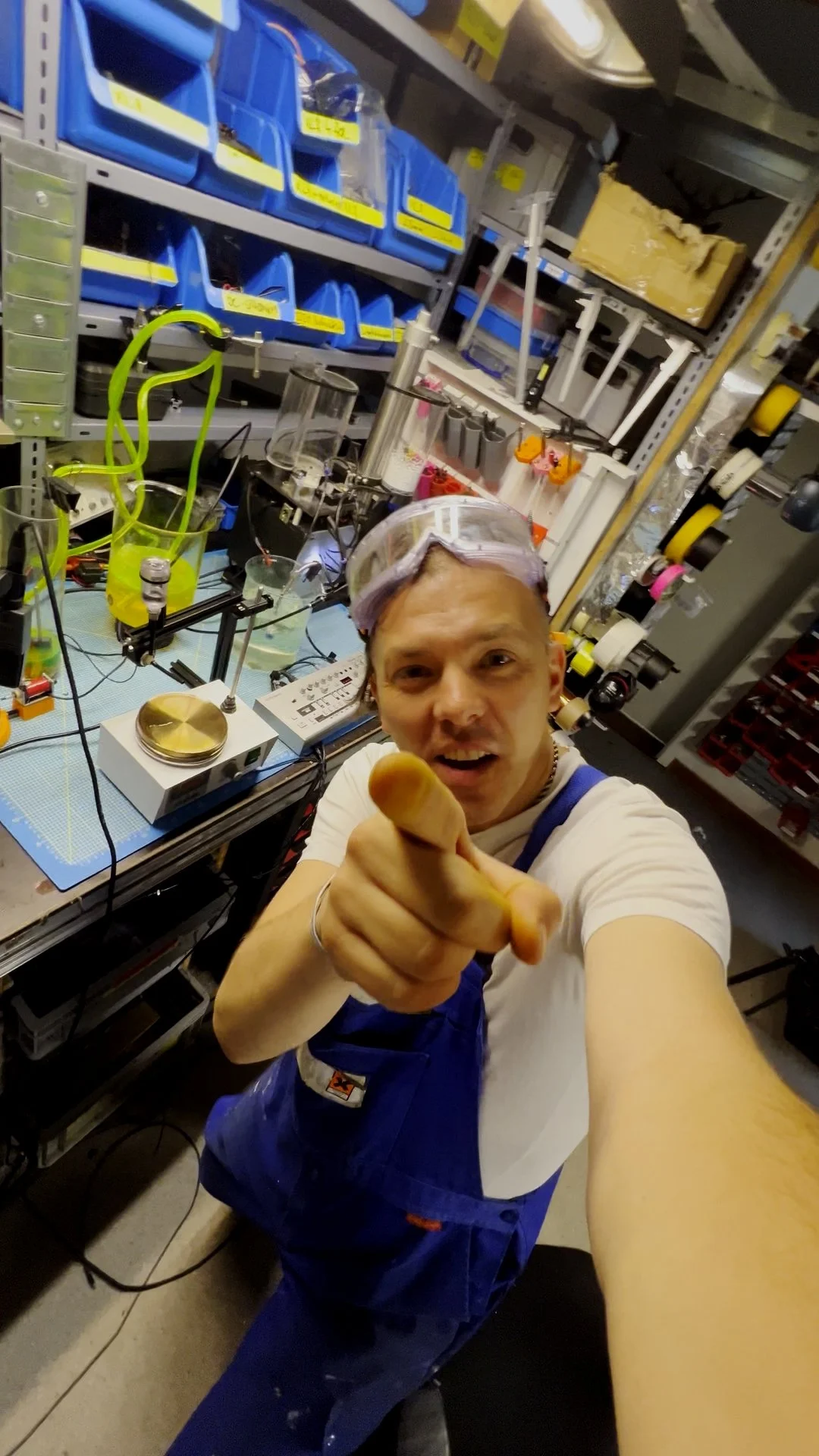
A performance, using chemistry equipemnt - water, heat, glass and pressurized air - collected sounds from the lab to create ACID TECHNO.
“Acid” is the most synthetic sound electronic music has: it was born from a single silicon box, the TB-303. ACID TECHNO takes that sound and pulls it back into the physical world. Water, heat, glass and air, driven by pneumatics and played on a table full of lab equipment, generate the kicks, the bass, the percussion and the texture in real time.
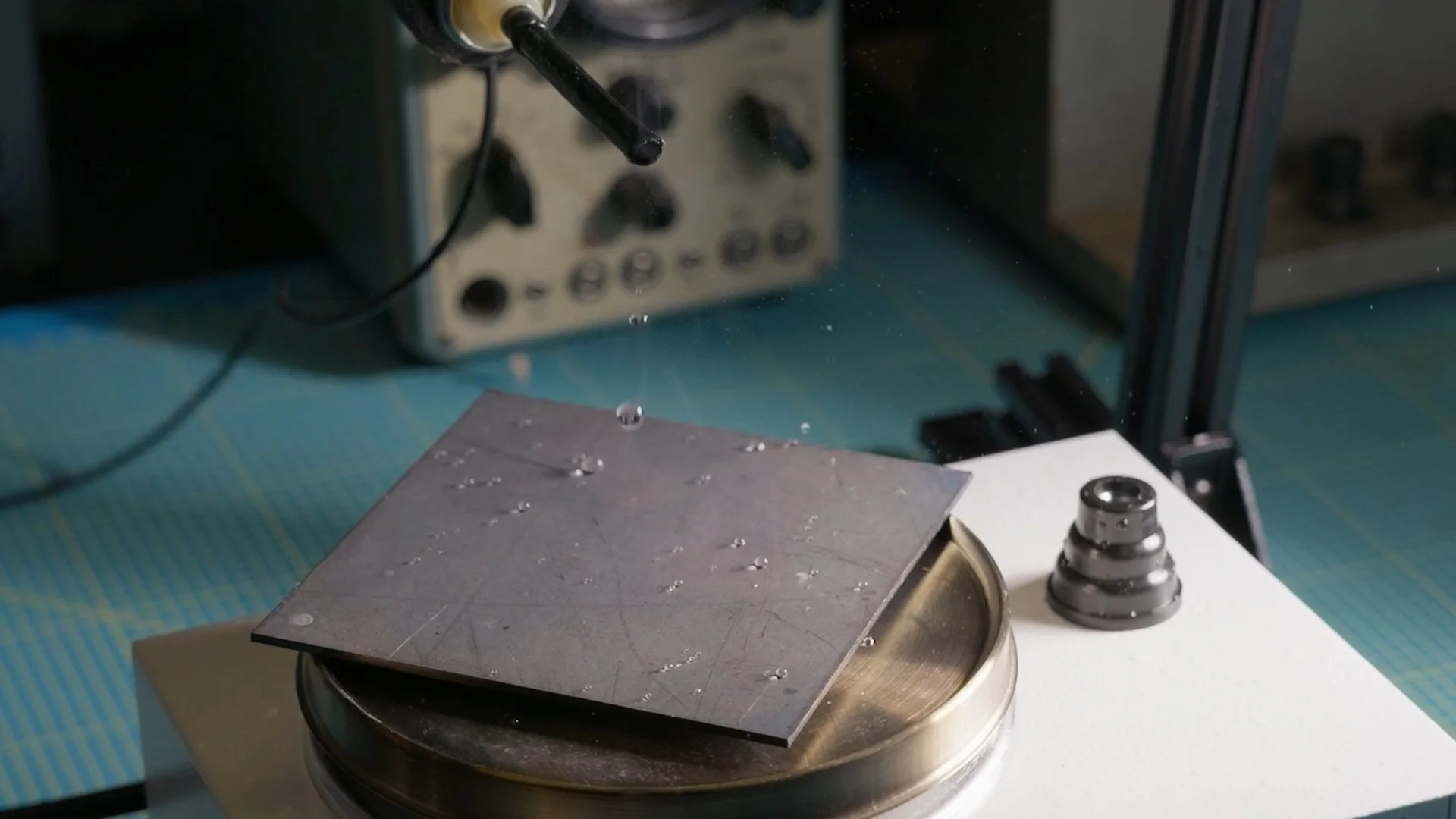
The Leidenfrost effect
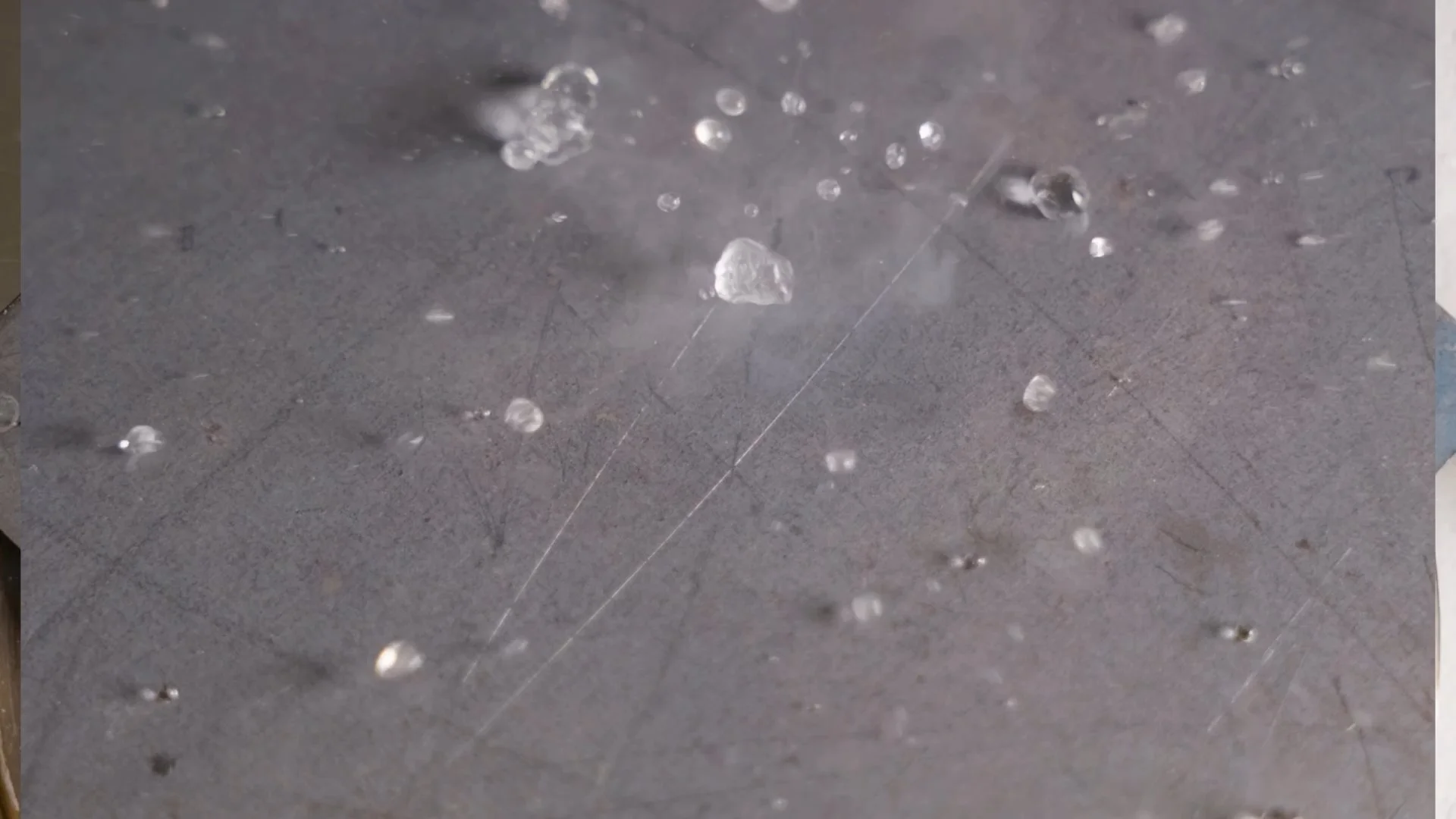
When a droplet of water meets a surface far hotter than its boiling point, it does not simply evaporate. A thin cushion of its own vapor forms beneath it and lifts it clear of the metal, so the drop hovers and skitters instead of touching down.
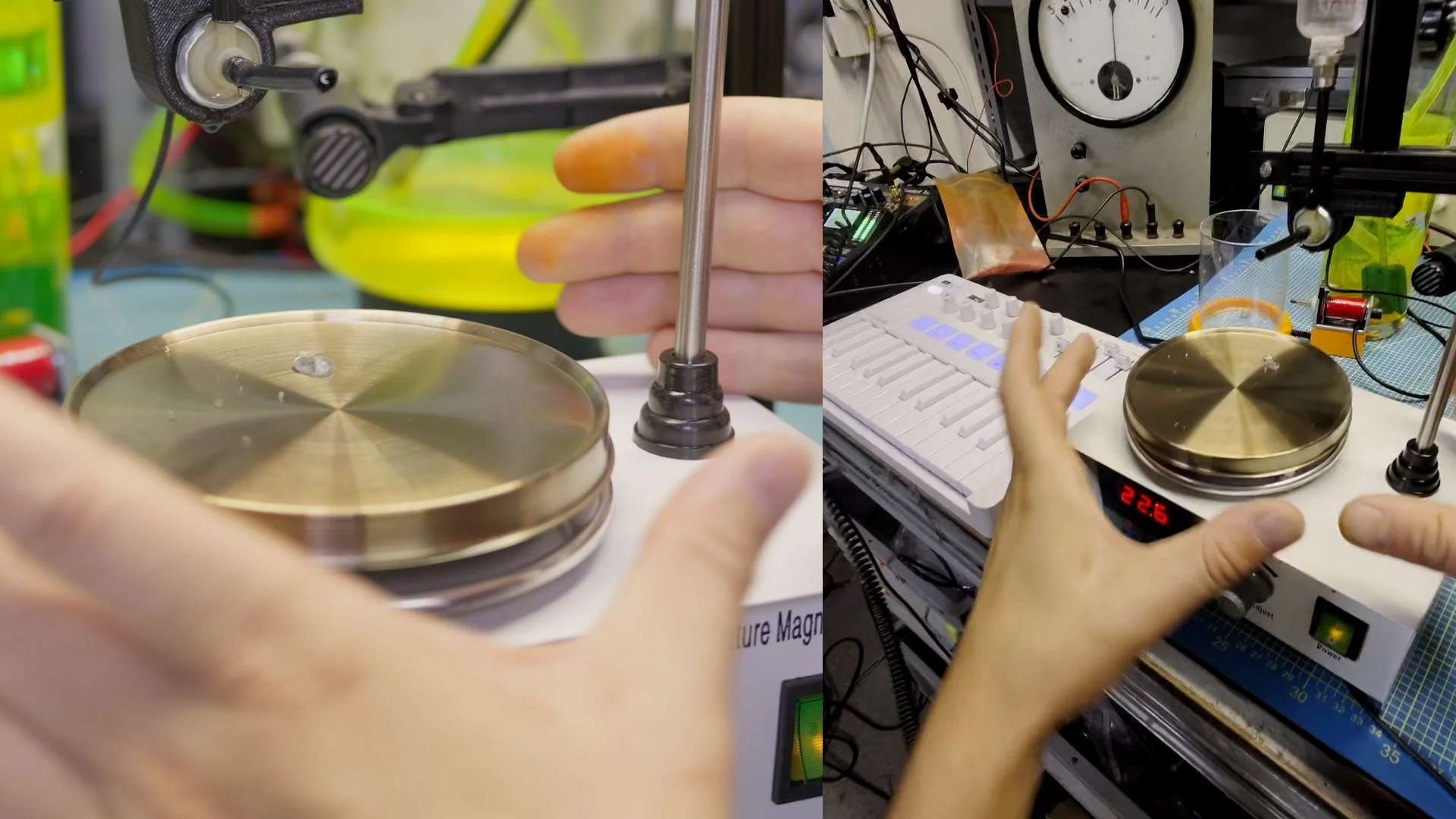
On a plate held around 250°C, each drop becomes a tiny, self-propelled body that hisses, ticks and rolls. Close-miked, these are the percussive and near-ASMR textures that run through the piece. The physics that keeps the water alive on the plate is the same physics that gives the sound its grain.
Ingredients
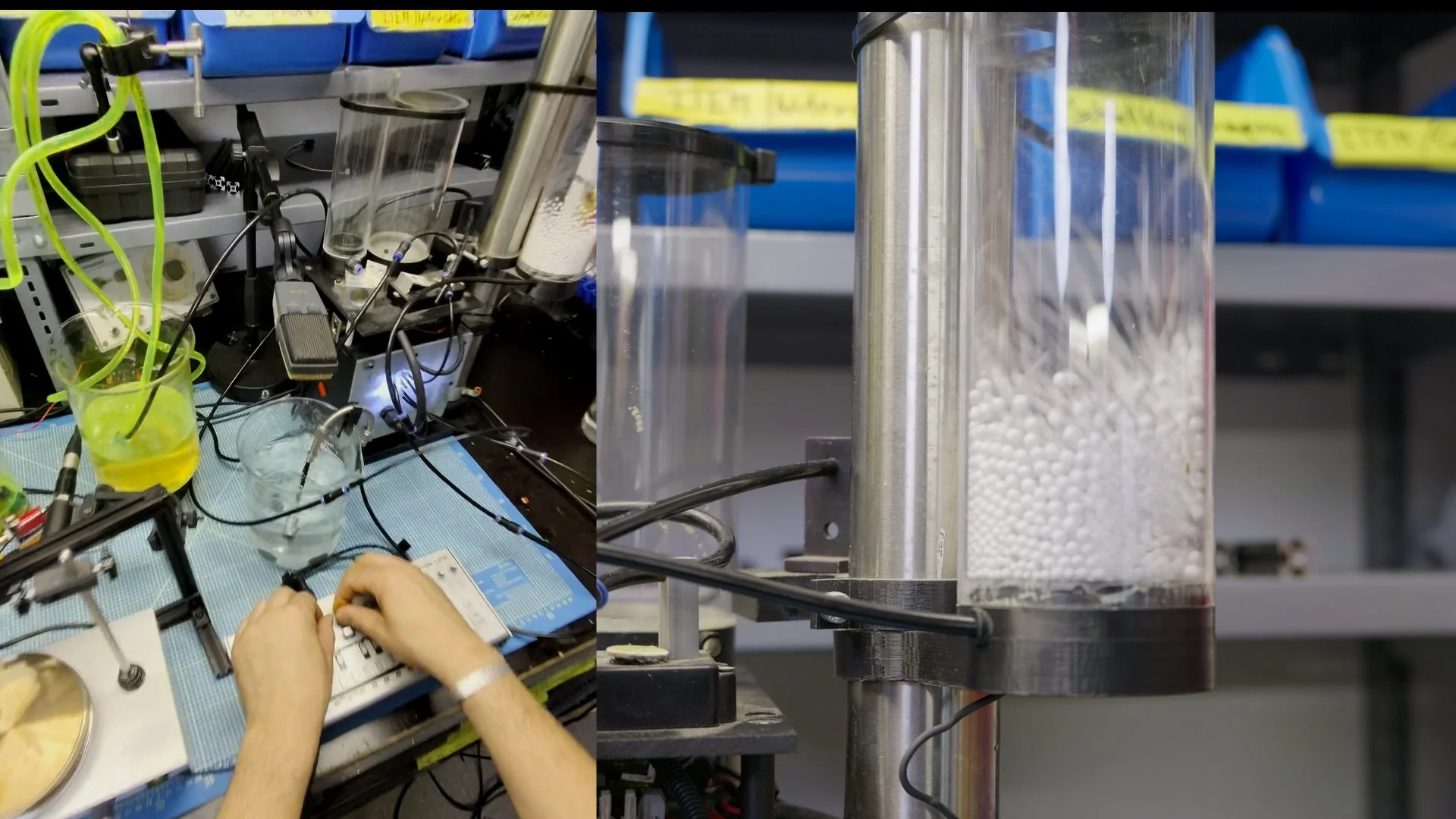
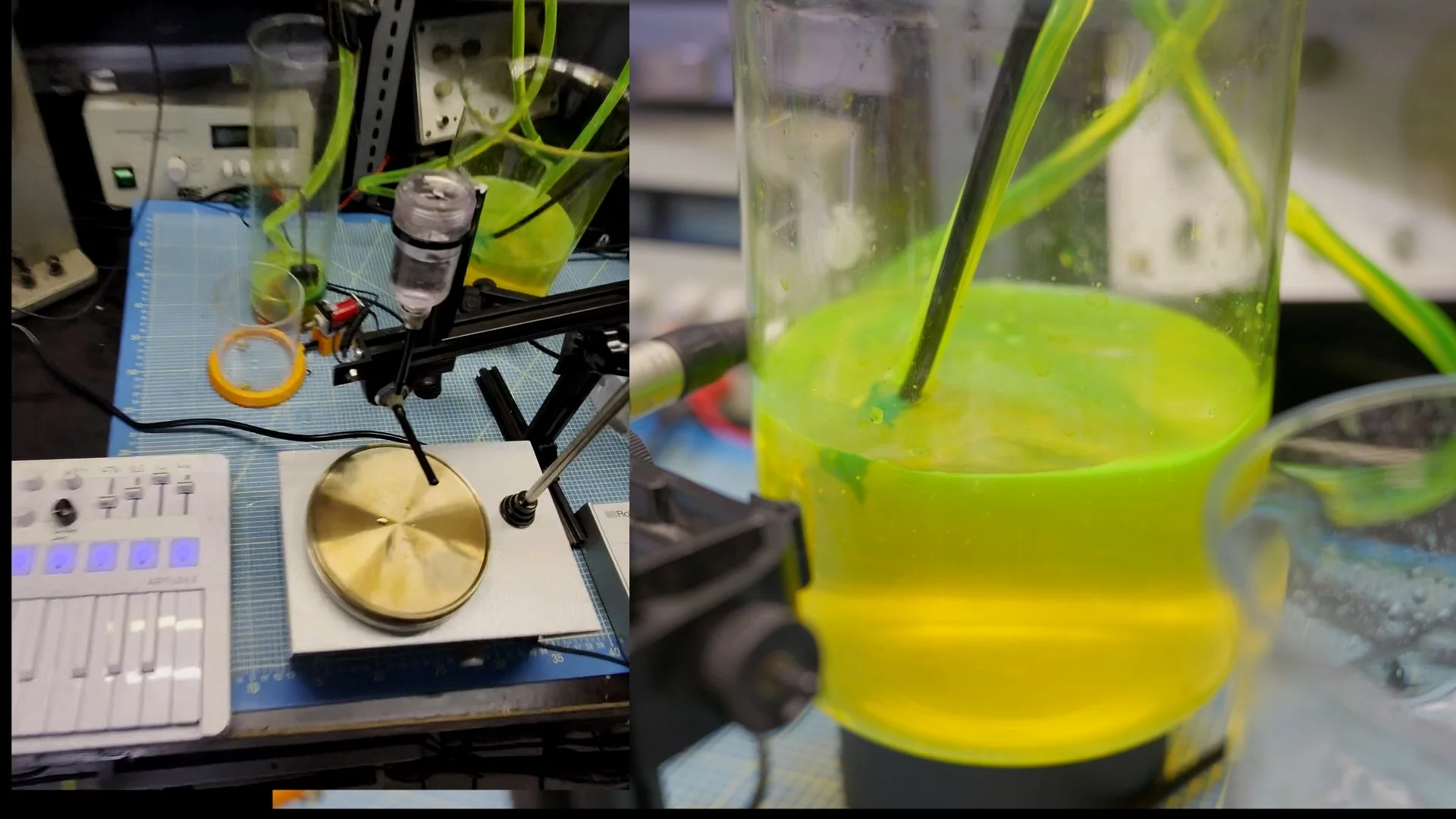
Water & liquids, 6 bar pneumatics: Various liquids driven with pressurized air at 6 bar woith a custom made Bubble end. The bubbling generates kick drums and low-end movement.
Leidenfrost plate, ~250°C: Water droplets levitating on a heated plate, close-miked for percussive ticks and ASMR-like texture.
Beaker & hydrophone: A hydrophone inside the glass picks up the liquid sounds from underwater, the voice of the process itself.
Glass vessels: Struck and rung as tuned and untuned percussion on lab glas.
Pneumatics: The excitation mechanism throughout: the hands that strike, push and agitate the liquids and glass.
Acid: A an ounze of 303
Work details
Artist: Moritz Simon Geist
Format: Live A/V performance. Lab Equipment and Video.
Sound generation: Physical processes · lab equipment
Performed at: Prix Ars Electronica Award Ceremony 2026, Linz
Social: 800k Views on Instagram
Year: 2026